

TEN YEARS OF LEADING FROM THE SOUTH:
A Collective Reflection from the Executive Directors
Four Funds. One Conviction.
Ten years ago, we chose to chart a new path. Bold and rooted in decades of hard-won experience across our regions. We are Leading from the South — a global alliance of four women's funds: the African Women's Development Fund, Fondo de Mujeres del Sur, the International Indigenous Women's Forum–AYNI Fund, and Women's Fund Asia. As both funders and conveners, we support organisations and networks working towards climate justice, economic justice, sexual and reproductive health and rights (SRHR), and ending gender-based violence (GBV) — fostering cross-regional collective action, amplifying knowledge and agendas from and about the Global South, and shifting the global donor community towards more equitable, trust-based funding for gender justice.
We were convinced that women, girls, and gender-diverse movements deserve sustained, flexible, trust-based resourcing to drive lasting change, and that those at the frontlines of the struggle are best placed to lead the solutions. From the start, we were clear about what we were building towards: unapologetic Global South leadership with communities themselves shaping knowledge and setting political agendas.
Our approach was intentionally designed to advance gender justice over the long term. We believed that meaningful, enduring change cannot be imposed from outside or constrained by short funding cycles and distant priorities. It must be rooted in, and led by, the movements themselves.
Ten years on, we can confidently say that what we have built together has far exceeded our most hopeful imaginings.
A decade of impact
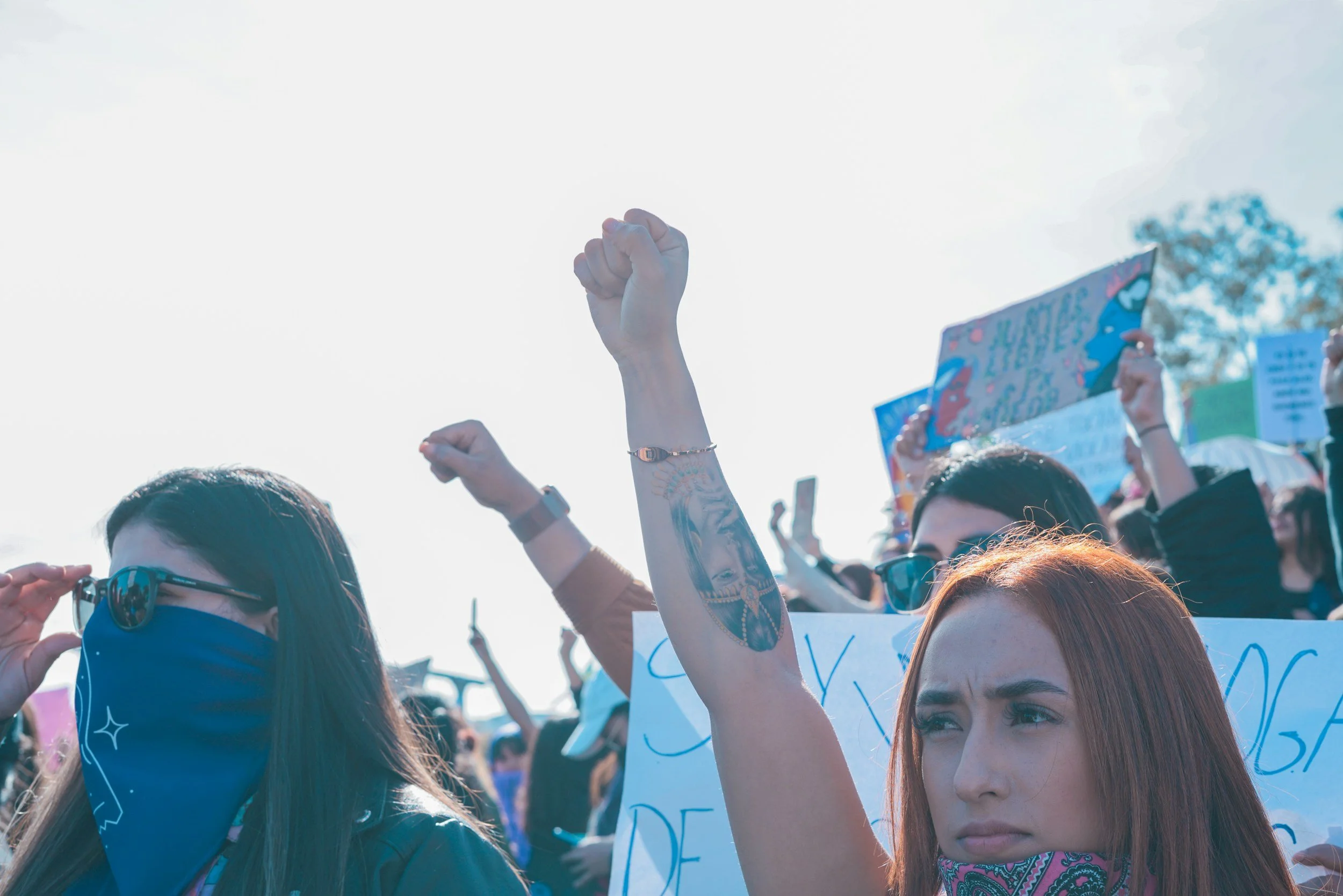
Across a decade, we have watched feminist organising transform in ways that matter. The movement has grown extraordinarily diverse, vibrant, more interconnected, and more dynamic. Younger generations of feminist leaders are reshaping what struggles for rights, equality, and justice look and sound like. Organising has adapted rapidly to changing conditions. Through digital mobilization, possibilities for cross-regional solidarity and South–South cooperation have expanded. We have watched advocacy grow more sophisticated. Feminist movements are naming injustice, mapping the change that needs to happen, and doing so through explicitly gender-conscious, decolonial approaches that challenge structures and systems that produce harmful policies.
At the same time, movements have found a balance between specialising in specific issues and contexts, and defining core approaches across movements. At the heart of this organising, led by women and gender-diverse communities, is collective care. This is how we have sustained ourselves and one another across regions and generations, and how we build the kind of movements that last.
Leading from the South has been proud to contribute to this transformation. In a decade, we mobilised more than $152 million, made over 1,700 grants across Africa, Asia, and Latin America, supported 1,163 grantee partners across 83 countries, and contributed to 625 changes in laws, policies, and regulations. But our work was never only about disbursing funds. We went beyond traditional partner lists, channeling short-term grants to frontline women and gender-diverse organisations, and invested in the conditions that nurture long-term movement, pairing resources with capacity strengthening and bringing partners together across regions to connect, strategise, and learn from one another.
What numbers alone don’t capture
The true meaning of this work lives in the changes communities have fought for and achieved.
In Vanuatu, the Indigenous women of the Santo Sunset Women's Environment Network ran awareness campaigns across 42 communities, by boat and on foot through dense forest, until they had built a collective position strong enough to achieve a signed logging ban across Western Santo. Chiefs holding traditional authority over these decisions publicly acknowledged that women's voices carried equal weight in determining the future of their land.
In Kenya, where female genital mutilation remains prevalent among Maasai communities despite a national ban since 2002, LFS partners Oltoilo Lee Maa CBO and the Mukogodo Girls Empowerment Programme have worked to shift these deeply rooted norms. With increased awareness of FGM's harms, direct engagement of communities, and advocacy for stronger protective laws, a new generation of better-informed and better-educated girls is now less likely to undergo the practice.
In Sri Lanka, where one in five women has experienced sexual violence linked to the civil war, survivors routinely face stigma and silence. A grantee, Stand-Up Movement, responded by developing a mobile app — Women Are Voices Everywhere (WAVE)— that allows women workers to report incidents of gender-based violence, seek support, and access information safely.
In Pakistan, home to 8.5 million domestic workers, most of them women, LFS partner WISE successfully advocated for fairer working conditions. In November 2023, the Punjab provincial government issued a policy guaranteeing minimum wages for domestic workers and established a helpline for reporting abuse. This is a first step toward fuller labour rights, access to credit, and healthcare.
These outcomes were not the product of isolated projects or short-term interventions. They are the product of organisations trusted with resources, given room to lead, and supported over time to build the knowledge, networks, and confidence that make lasting change possible.
The headwinds we faced
Profound challenges have also shaped the last decade. The forces working against gender justice have grown more organised, better resourced, and more sophisticated — mobilising against the rights and freedoms that feminist movements have spent decades securing. Across every region, we have watched civic space shrink, conservative governance tighten its grip, and international mechanisms let down the women and girls who need them most. A global pandemic set back years of hard-won progress, deepening inequality and pushing the most marginalised communities further to the edges.
We have also witnessed many of our grantee partners navigating sudden funding gaps, shortened timelines, and an environment in which long-term commitment has become increasingly rare. When the conditions change this fast, even the most resilient organisations are tested.
And we must also be honest about our lessons: when the context shifted, we did not always pivot collectively fast enough. That reckoning shapes our vision for what must come next.
The next chapter
As we celebrate our 10th anniversary, our vision for LFS's next decade of collective work is growth in scale and deeper, more transformative impact. We want to invest more richly in fewer and more transformative relationships. We want collaboration at the centre and collective action at the core — across our regions, among the funders who partner with us, across the broader movements we are part of.
We envision an LFS where Global South leadership is the lived reality of how priorities are set, resources are distributed, and decisions are made. We want to resource feminist movements not merely to survive, but to thrive, centering climate justice, economic justice, SRHR, and ending GBV, not as a separate budget line but as the lens through which all of these struggles are understood.
Over the next 10 years, our ambition is to raise and distribute $150 million through pooled funding. This is more than a financial target. It is a commitment grounded in a decade of evidence, relationships, and movement leadership. We do not just want to defend existing gains, but to help build the futures our communities deserve, with solidarity, creativity, courage, and joy.
Now it is your turn
To funders: Be brave. Put your funding where change actually happens. Move beyond short-term projects. Invest in the organisational, emotional, and strategic sustainability of grassroots groups, especially those led by Indigenous, Afro-descendant, young, and gender diverse activists. Make your funding intersectional. Gender justice lives inside climate work, democratic governance, and economic justice. These movements are essential drivers of democratic transformation. Fund them as such.
To Global South movement leaders: This moment belongs to you as much as it does to us. Leading From the South exists to resource, strengthen, and amplify your leadership and the broader the constituency we collectively share. Continue building this ecosystem with us across borders and generations.
To our collaborators and allies: LFS is still standing because we have always chosen togetherness. In this moment when the pull towards competition is intensifying, we invite you to continue holding that line with us. Let us go beyond our siloed networks and invest in cross-movement relationships strong enough not only to resist injustice, but to build collective futures grounded in dignity, care, and gender justice.
With solidarity, conviction, and hope,
The Executive Directors of Leading from the South
African Women's Development Fund (AWDF) · Fondo de Mujeres del Sur (FMS)
International Indigenous Women's Forum–AYNI Fund (FIMI/AYNI) · Women's Fund Asia (WFA)